.png)
The Governance Nexus: Merging Disaster Risk Reduction and Climate Change Adaptation in Malaysia
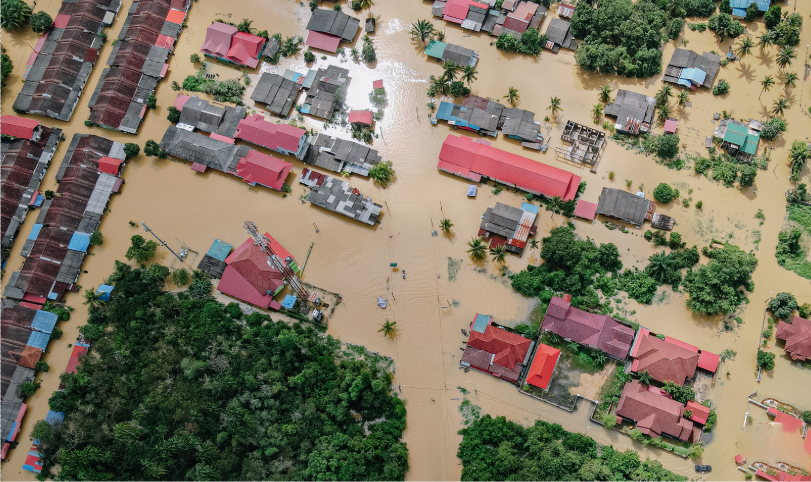
In Malaysia, the increasing threat of climate-related disasters such as catastrophic floods, droughts, landslides, coupled with heat waves and rising sea levels, has led the government to change its approach to addressing emerging threats and to improving long-term resilience. Understanding national climate risk governance is important in an era of increased environmental instability and climate change. Contemporary corporate frameworks and public governance structures often regard disaster risk reduction and climate change adaptation as distinct and incompatible domains, governed by separate entities. Yet, in reality, it is crucial to integrate and unify these sectors into a cohesive governance nexus to safeguard society and sustain economic viability.
The necessity of integrating disaster risk reduction and climate change adaptation
Malaysia continues to suffer from a fragmented governance structure, despite broad consensus on the need for integrated climate actions. At the national level, disaster risk reduction (DRR) is handled by the National Disaster Management Agency (NADMA) and the Malaysia Civil Defence Force (APM) but climate change adaptation (CCA) falls under the Ministry of Natural Resources and Environmental Sustainability (NRES). This divide creates a siloed administrative structure that duplicates functions, causes fragmented policy execution, and precludes effective data sharing.
For corporate stakeholders, this organizational distance often results in increased exposure to transition and physical risk. Resource duplication, initiative fatigue and ineffective capital allocation are often the consequences of separating disaster risk planning from climate practitioners. Integrating Disaster Risk Reduction (DRR) and Climate Change Adaptation (CCA) within a unified governance framework will promote emergency preparedness, improve rapid response, and facilitate the implementation of progressive climate adaptation strategies. This combination enhances policy synergies, improves funding efficiency and shifts the national focus from reactive recovery to proactive, risk-aware development.
Stakeholders Coalitions in the Governance Framework
A strong governance system requires a polycentric, multi-level coalition of engaged collaborators. The proposed integration framework stresses the interrelatedness among three main groups:
a) Government Entities: Federal, state and local government agencies need to establish and implement coherent policies and collectively enforce regulations. A first step would involve establishing a “Steering Committee for Disaster Risk Reduction and Climate Change Adaptation” to streamline command structures.
b) Private Sector: Corporate organizations have a key role to play in finance and innovation and must move beyond token corporate social responsibility (CSR) exercises. Corporate actors should incorporate ESG targets with localized risk management and adaptation objectives and encourage Public-Private-Academia-Community Partnerships (PPACP) that support economic, environmental and social resilience.
c) Social Participants: Non-governmental organizations (NGOs) and Civil Society Organizations (CSOs), academia and technical researchers, together with local communities, offer other stakeholders opportunities for collaborative grassroots participation, localized risk assessment and contextual expertise. Their active involvement ensures that adaptation strategies are culturally appropriate, equitable, and effectively implemented.
Summary
The convergence of disaster risk reduction and climate change adaptation governance is an urgent stakeholder imperative with a considerable impact on risk assessments in Malaysia. To strengthen this Governance Nexus, directors, both executive and non-executive, need to advocate for open data sharing, invest strategically in resilience, and build collaborative multi-stakeholder partnerships. Private entities should prioritize and institutionalize sustainability as a key principle, while using corporate strategy to drive risk-conscious progression, within their companies, but also more broadly through supply chains and markets. Ultimately, it is the national, and even the regional economy, that will benefit from this integration of corporate governance with unified climate policies, all fully aligned with government initiatives and national aspirations.

Comments